IPL Photofacials Explained
When Sun Damage Starts Showing on Your Skin
Learn how light targets unwanted pigment, why treated spots may look darker before they fade, and how recovery, repeat visits, and sun protection fit into your treatment plan.
When Sun Damage Starts Showing on Your Skin
Maybe you've noticed brown spots appearing on your cheeks, discoloration across your forehead, or areas of skin that no longer look as even as they once did.
IPL photofacials use pulses of light to target certain types of unwanted pigmentation, which may reduce the appearance of sunspots and discoloration.
Not every dark spot responds to IPL. Jennifer examines your skin, considers what may be causing the discoloration, and explains whether IPL is appropriate for you. She also discusses how to protect your skin afterward, especially in Albuquerque's strong sun.
Choosing a treatment that fits your pigmentation
Uneven color can have different causes, so a brown patch isn't automatically a sun spot. Melasma, which often appears as patches on the face, can need a different approach from individual sun spots. Your natural skin tone and any recent tanning also matter because IPL can affect pigment in the surrounding skin. Burns and unwanted lighter or darker patches are possible.
Your consultation gives you time to talk through your skin concerns and health history before choosing treatment. Jennifer explains the options and realistic outcomes without pressure to go ahead. You can take that information home and think about what fits your goals.
Feeling prepared for IPL treatment and recovery
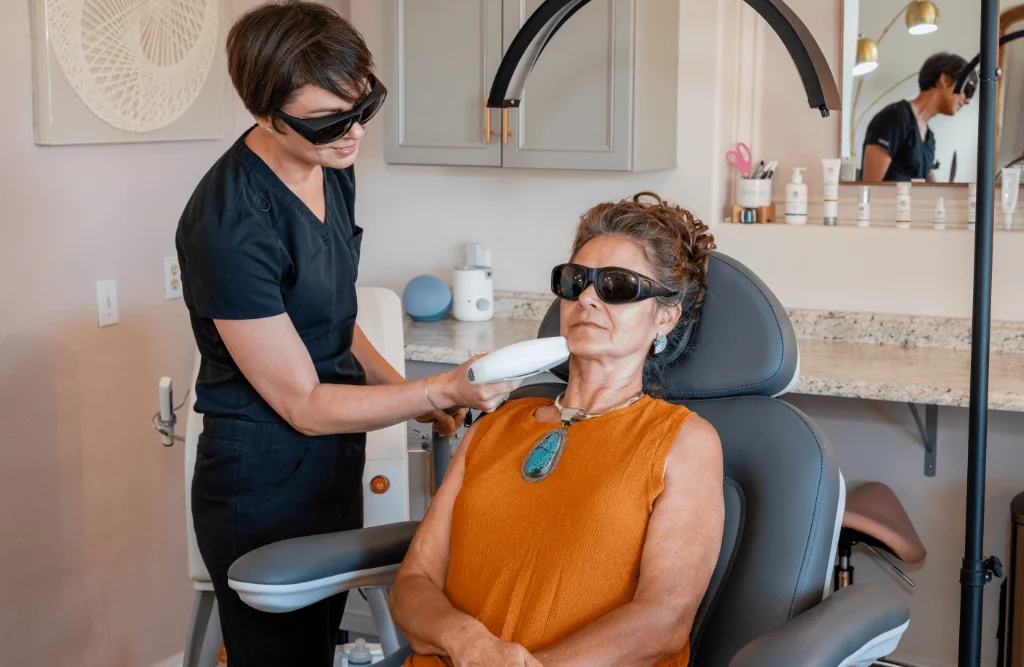
During IPL treatment, you wear protective eyewear while a handheld device delivers light pulses to your skin. You may feel warmth or a snapping sensation with each pulse. Afterward, your skin may look red or feel mildly sunburned for a few days. Treated spots can temporarily look darker before they flake away, so fading isn't necessarily the first change you'll notice.
Plan for those visible changes if you have work, photos, or an event coming up. Your booking forms include preparation and aftercare instructions, and you can call, text, or email the spa with questions as your skin recovers.
Planning your visits and protecting your results
You may need more than one IPL visit to get the improvement you're looking for. The area treated, the pigmentation, and your skin's response affect the plan. Some spots may fade more than others, and treating existing spots doesn't prevent new sun damage. Space between appointments allows your skin to recover and gives you time to see how it responds.
Sun protection matters before and after IPL. If your plans include outdoor work, travel, or long days in the sun, bring those up when discussing timing with Jennifer.
Frequently Asked Questions
Does an IPL photofacial hurt?
There are ways to make IPL more comfortable. Providers commonly use skin cooling, such as a chilled treatment head, cool air, or cooling gel, to reduce the heat you feel. Some also use numbing cream when appropriate. You may still feel brief snapping or stinging with the pulses. Before treatment, you can discuss these options with Jennifer and find out which comfort measures fit your treatment, so you know how discomfort will be managed.
Will my spots look darker after IPL, and how long does that last?
Yes, spots can temporarily darken before flaking away, often over about a week. Many people return to work or errands the same day, though darker spots, redness, or mild swelling may still be visible. Allow extra time before photos or an event. You'll receive aftercare instructions, including avoiding picking at the spots, and you can call or text the spa with questions for Jennifer as you heal. For blistering or worsening pain, contact Jennifer promptly. If symptoms are severe or you cannot reach her, seek medical care rather than waiting for a reply.
When will I see results, and will I need more than one treatment?
Fading develops as your skin clears the treated pigment. You may see facial spots fade within a week or two. Areas such as the hands can take longer because skin renewal is slower there. A series of around four to six visits is common in IPL care, allowing improvement to build between treatments. Everyone's treatment plan is individual. Jennifer discusses the number and spacing recommended for your specific concerns, what changes to expect, and how you'll assess the improvement together.
Is IPL right for my skin tone and dark spots?
You don't have to work that out on your own. IPL is generally best suited to lighter, untanned skin with sun spots. Darker skin tones, a recent tan, or melasma need particular care because the light can affect your natural pigment or worsen discoloration. Jennifer reviews your skin concerns and health history before recommending treatment. You can show her the spots without knowing what caused them, then discuss whether IPL or another approach fits your skin and goals.
How much does IPL Photofacial cost?
See the IPL Photofacial pricing section below for treatment options and prices.